


Introduction
Target corporation subsidiaries list information is useful for readers who want to understand which companies are legally part of Target Corporation and how the retail giant structures its business. According to Target Corporation’s latest Form 10-K for the fiscal year ended January 31, 2026, Target’s significant subsidiaries include Target Brands, Inc., Target Enterprise, Inc., and Target General Merchandise, Inc.
However, there is an important distinction between a subsidiary, an owned brand, and a business or service owned by Target. For example, Target states that it owns Shipt and Roundel, while brands such as A New Day, Good & Gather, and up & up are part of its owned-brand portfolio rather than being presented as significant subsidiaries in its SEC subsidiary exhibit.
This guide explains the current Target Corporation subsidiaries list, what each significant subsidiary does, how Target’s ownership structure works, and why some familiar Target names should not automatically be classified as subsidiaries.
What Is Target Corporation?
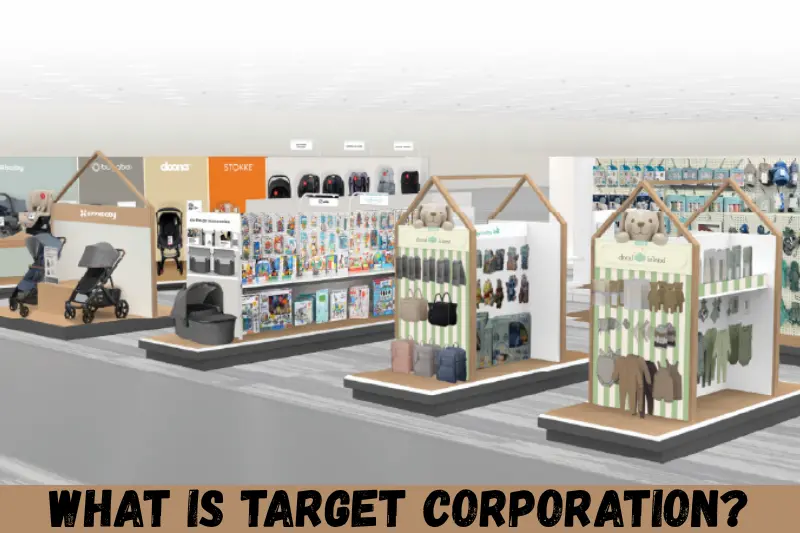
Target Corporation is a major U.S. general merchandise retailer headquartered in Minneapolis, Minnesota. The company was incorporated in Minnesota in 1902 and operates stores and digital channels serving customers across the United States. Target reported $104.78 billion in net sales for fiscal 2025, according to its investor materials.
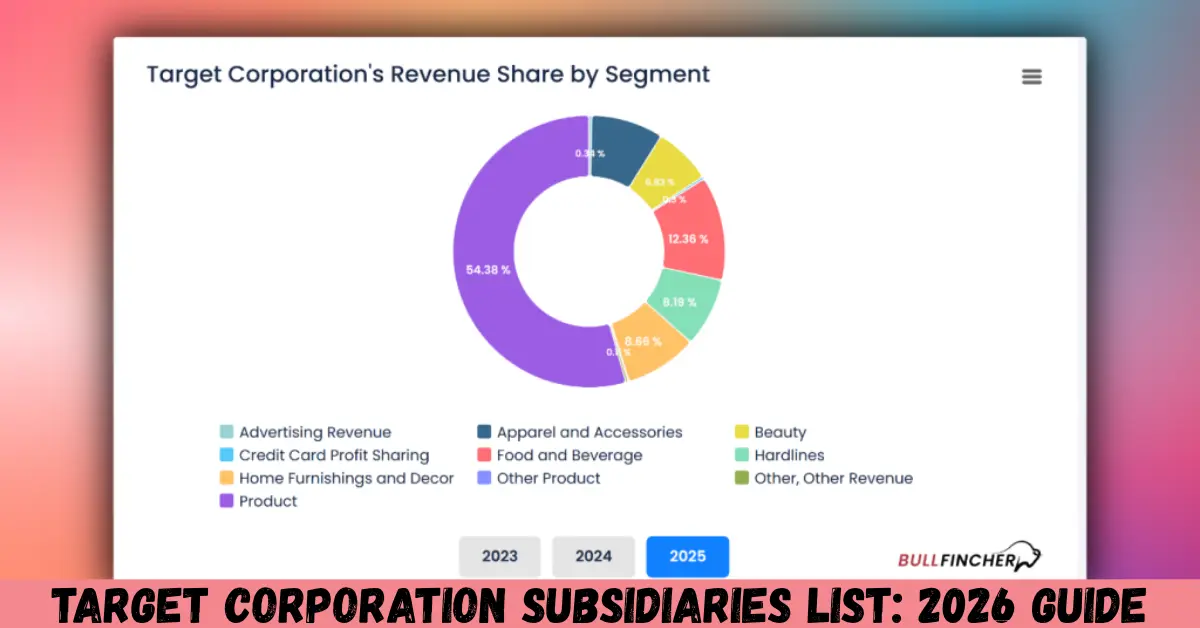
Target operates as a single reportable segment. Its business includes merchandise categories such as apparel and accessories, beauty, food and beverage, hardlines, home furnishings and décor, and household essentials.
For corporate reporting purposes, Target’s annual report uses “Target,” “the Corporation,” and similar terms to refer collectively to Target Corporation and its subsidiaries unless the context requires otherwise.
Target Corporation Subsidiaries List
The latest SEC Exhibit 21.1 associated with Target Corporation’s fiscal 2025 Form 10-K identifies three significant subsidiaries as of January 31, 2026:
- Target Brands, Inc. (Minnesota)
- Target Enterprise, Inc. (Minnesota)
- Target General Merchandise, Inc. (Minnesota)
The filing also states that other subsidiaries are omitted from the exhibit because, individually or collectively as described in the filing, they did not qualify as significant subsidiaries under the applicable reporting requirements.
Target Brands, Inc.
Target Brands, Inc. is one of the significant subsidiaries listed in Target Corporation’s latest SEC filing.
The name is closely associated with Target’s extensive portfolio of owned and exclusive brands. However, readers should avoid assuming that every Target-owned brand is a separate subsidiary of Target Brands, Inc. The SEC’s Exhibit 21.1 specifically identifies Target Brands, Inc. as a subsidiary, while Target’s annual report separately describes its owned-brand portfolio.
Target’s owned-brand portfolio includes fashion, beauty, food, household, electronics, home and other product categories. Target says its owned and exclusive brands account for approximately one-third of annual sales.
Examples include:
- A New Day
- All in Motion
- Art Class
- Auden
- Good & Gather
- Goodfellow & Co.
- Hearth & Hand with Magnolia
- Heyday
- Threshold
- Universal Thread
- up & up
- Wild Fable
These names are brands, not additional significant subsidiaries listed in Exhibit 21.1.
Target Enterprise, Inc.
Target Enterprise, Inc. (Minnesota) is another company identified as a significant subsidiary in Target Corporation’s January 31, 2026 subsidiary disclosure.
Its inclusion in the SEC filing demonstrates that Target’s corporate structure includes legal entities that support the wider business beyond the consumer-facing Target name.
For readers researching companies under Target Corporation, Target Enterprise, Inc. should therefore be included in a current Target corporation subsidiaries list.
Target General Merchandise, Inc.
Target General Merchandise, Inc. (Minnesota) is the third significant subsidiary identified in Target’s latest Exhibit 21.1.
The company’s name reflects Target’s core general-merchandise retail business. Still, the SEC filing itself does not provide a detailed consumer-facing description of each subsidiary’s individual operations, so it is better to rely on the filing for its status as a significant subsidiary rather than make unsupported claims about specific internal functions.
Target Corporation Ownership Structure
Target’s corporate structure can be easier to understand when the different types of business names are separated.
| Category | Examples | How to Understand Them |
|---|---|---|
| Parent company | Target Corporation | Publicly traded parent company |
| Significant subsidiaries | Target Brands, Inc.; Target Enterprise, Inc.; Target General Merchandise, Inc. | Legally significant subsidiaries disclosed in SEC Exhibit 21.1 |
| Owned brands | A New Day, Good & Gather, up & up | Target-owned consumer brands |
| Owned businesses | Shipt, Roundel | Businesses Target says it owns |
| Partner-operated services | CVS Pharmacy in Target stores | Operated under a separate arrangement |
Target’s 2026 filing states that all subsidiaries are wholly owned, while its consolidated financial statements include Target Corporation and its subsidiaries after eliminating intercompany balances and transactions.
Target-Owned Brands vs. Subsidiaries
One of the most common mistakes when researching the Target corporation subsidiaries list is treating every Target brand as a subsidiary.
They are not necessarily the same thing.
A subsidiary is a separate legal entity controlled by a parent company. A brand is a commercial identity used to market products or services. One company can own numerous brands without each brand being a separately incorporated subsidiary.
Target’s official website currently highlights more than 40 owned brands, while its SEC filing identifies only three significant subsidiaries by name.
Examples of Target Owned Brands
Target’s owned-brand portfolio includes products across several categories:
Fashion and apparel
- A New Day
- All in Motion
- Art Class
- Ava & Viv
- Goodfellow & Co.
- Universal Thread
- Wild Fable
Home
- Brightroom
- Casaluna
- Hearth & Hand with Magnolia
- Open Story
- Pillowfort
- Threshold
- Room Essentials
Food and household
- Good & Gather
- Favorite Day
- Market Pantry
- up & up
- Everspring
Technology and accessories
- Heyday
- dealworthy
Target’s annual report also identifies additional owned and exclusive brands, demonstrating how broad the company’s brand portfolio has become.
Is Shipt a Target Subsidiary?
Shipt is an important name when discussing companies associated with Target, but it should not be confused with the three significant subsidiaries named in Exhibit 21.1.
Target’s corporate website explicitly states that Target Corporation owns Shipt and Roundel.
Shipt is particularly relevant to Target’s fulfillment and delivery ecosystem. Target acquired Shipt in 2017, and the business has continued operating as part of Target’s broader corporate portfolio.
Therefore, if someone searches for companies owned by Target, Shipt is relevant. If they specifically want the significant subsidiaries disclosed in the latest SEC Exhibit 21.1, the three companies listed earlier are the appropriate answer.
What Is Roundel?
Roundel is another business Target identifies as being owned by Target Corporation.
Roundel is associated with Target’s retail media operations, allowing brands and advertisers to reach Target shoppers through advertising opportunities connected with Target’s retail ecosystem.
Again, Roundel should not automatically be added to the SEC’s three-name significant-subsidiary list. The distinction between an owned business and a significant subsidiary is important when producing an accurate corporate-structure article.
Target Corporation and India
India is relevant to Target Corporation because the company has international business entities connected with sourcing and corporate activities.
Target’s international business privacy policy identifies Target Corporation India Private Limited (TII) and Target Global Sourcing Limited (TGSL) among its entities outside the United States. It also refers to TGSL subsidiaries, branch offices, representative offices and liaison offices.
This is particularly useful for Indian readers searching for Target Corporation information because it shows that Target’s international presence is not limited to its U.S. retail stores.
However, Target’s SEC Exhibit 21.1 does not list every subsidiary worldwide. The filing specifically explains that names of other subsidiaries are omitted when they do not meet the reporting threshold for significant subsidiaries.
Why Does Target Have Multiple Subsidiaries?
Large corporations commonly use separate legal entities for different business, operational, intellectual-property, administrative, financing or geographic purposes.
For Target, having subsidiaries can help organize specific parts of the overall corporate structure while allowing the parent company to consolidate the financial results.
Target’s annual report states that its consolidated financial statements include the balances of Target Corporation and its subsidiaries, with intercompany balances and transactions eliminated.
The important point for readers is that the existence of a subsidiary does not necessarily mean customers will interact with that company separately. Many customers simply know the consumer-facing Target brand.
How to Research Target Subsidiaries Correctly

If you need an accurate and current Target corporation subsidiaries list, use the following process.
Step 1: Start With the Latest Annual Report
Look for Target Corporation’s latest Form 10-K rather than relying on an old third-party list.
Target’s fiscal 2025 Form 10-K covers the year ended January 31, 2026.
Step 2: Find Exhibit 21.1
Exhibit 21.1 is particularly useful because it is titled “List of Significant Subsidiaries.”
For the January 31, 2026 filing, it identifies:
- Target Brands, Inc.
- Target Enterprise, Inc.
- Target General Merchandise, Inc.
Step 3: Separate Brands From Legal Entities
Do not copy every name from Target’s product pages into a subsidiary list.
For example, Good & Gather and Threshold are Target-owned brands. They should not automatically be presented as subsidiaries simply because Target owns them.
Step 4: Check the Date
Corporate structures can change because of acquisitions, reorganizations, sales or other transactions.
For this reason, always include the reporting date when publishing a subsidiary list.
Benefits of Understanding Target’s Corporate Structure
Knowing the difference between Target Corporation, its subsidiaries and its brands can be useful for several reasons.
Better Business Research
Investors, researchers and students can identify the legal entities that Target considers significant rather than relying on informal lists.
More Accurate Company Information
Separating subsidiaries from brands prevents common corporate-structure errors.
Better SEO Content
For publishers, accurate terminology improves topical relevance and reduces misleading claims. A page that clearly explains subsidiaries, brands and owned businesses can answer more variations of the user’s search intent.
Easier International Research
Indian readers can also understand Target’s international corporate presence, including entities referenced in Target’s international privacy documentation.
Common Mistakes When Creating a Target Subsidiaries List
Mistake 1: Calling Every Target Brand a Subsidiary
A product brand is not automatically a legal subsidiary.
Mistake 2: Using an Old List
A list from several years ago may no longer represent the current corporate structure.
Mistake 3: Ignoring SEC Filings
For legal subsidiary information, regulatory filings are generally more reliable than random business-directory pages.
Mistake 4: Mixing Target With Unrelated Companies
The word “Target” appears in the names of other businesses. Make sure the information relates specifically to Target Corporation, the U.S. retailer.
Mistake 5: Claiming an Exhaustive List
Target’s Exhibit 21.1 is a list of significant subsidiaries, not necessarily every legal subsidiary owned by the corporation. The filing explicitly says other subsidiaries are omitted because they do not meet the relevant significance threshold.
Internal link
For more useful information, check our Target Corporation business guide to learn more about the company’s structure. You can also verify the latest corporate information through the U.S. Securities and Exchange Commission for official filing details and reliable company records.
For more useful information, check our Target Corporation business guide to learn more about the company’s structure. You can also verify the latest corporate information through the U.S. Securities and Exchange Commission for official filing details and reliable company records.
Frequently Asked Questions
What companies are subsidiaries of Target Corporation?
Target Corporation’s latest SEC Exhibit 21.1, dated January 31, 2026, identifies three significant subsidiaries: Target Brands, Inc., Target Enterprise, Inc., and Target General Merchandise, Inc. The filing notes that other subsidiaries are omitted because they do not qualify as significant subsidiaries under the applicable reporting requirements.
Does Target own Shipt?
Yes. Target’s official corporate website states that Target Corporation owns Shipt and Roundel. Shipt is therefore an important Target-owned business, although it should not automatically be described as one of the three significant subsidiaries named in Target’s latest Exhibit 21.1.
Are Target brands subsidiaries?
Not necessarily. Target owns numerous consumer brands, including A New Day, Good & Gather, Threshold and up & up. These are presented by Target as owned brands rather than being individually identified as significant subsidiaries in its SEC subsidiary exhibit.
Does Target have operations or entities in India?
Yes. Target’s international business privacy documentation identifies Target Corporation India Private Limited and Target Global Sourcing Limited among Target’s entities outside the United States. It also references subsidiaries and offices associated with Target Global Sourcing Limited.
Are all Target Corporation subsidiaries wholly owned?
Target’s latest Form 10-K states that all subsidiaries are wholly owned. Its consolidated financial statements include Target Corporation and its subsidiaries, with intercompany balances and transactions eliminated during consolidation.
Expert Tips for Using the Target Corporation Subsidiaries List
If you’re researching Target for business, investment, academic or content purposes, keep these practices in mind:
- Always check the latest Target Form 10-K.
- Use Exhibit 21.1 for significant subsidiary names.
- Mention the reporting date alongside the list.
- Do not confuse owned brands with legal subsidiaries.
- Treat Shipt and Roundel separately as Target-owned businesses when appropriate.
- Use Target’s official corporate information for brand and ownership details.
- For international research, check Target’s documentation covering its global legal entities.
- Avoid calling the list exhaustive when the SEC filing only discloses significant subsidiaries.
Conclusion
The current Target corporation subsidiaries list is relatively short when viewed through Target Corporation’s latest SEC disclosure. As of January 31, 2026, the company’s Exhibit 21.1 identifies Target Brands, Inc., Target Enterprise, Inc., and Target General Merchandise, Inc. as significant subsidiaries. Target also states that its subsidiaries are wholly owned.
At the same time, Target’s corporate ecosystem includes much more than these three legal entities. The company owns businesses such as Shipt and Roundel and maintains a large portfolio of owned brands including Good & Gather, A New Day, Threshold and up & up. These categories should be kept separate when discussing Target’s corporate structure.
For the most reliable research, use the latest SEC filing and Target’s official corporate resources rather than relying on outdated third-party lists. If you’re publishing this information, the practical next step is to add the January 31, 2026 reporting date to your page and review the latest SEC filing whenever Target releases a new annual report.
