



Customer Segmentation Analysis helps businesses understand that not every customer wants the same product, message, price, or experience. Instead of treating an entire customer base as one large group, businesses can divide customers into smaller groups based on shared characteristics, behaviors, needs, or value.
For example, a clothing store may have customers who buy premium products regularly, customers who only purchase during sales, and customers who buy occasionally. Although all of them are customers, their motivations and expectations can be very different.
By analyzing these differences, a business can create more relevant marketing campaigns, improve customer experiences, prioritize valuable customers, and make better decisions.
Customer segmentation can be based on factors such as demographics, location, purchasing behavior, interests, customer value, product usage, or specific needs. Modern approaches can also combine several variables and use techniques such as RFM analysis, clustering, and predictive analytics.
This guide explains what customer segmentation analysis is, why it matters, the main types, how to perform it step by step, useful methods and metrics, practical examples, common mistakes, and best practices.
What Is Customer Segmentation Analysis?
Customer segmentation analysis is the process of examining customer data and dividing a customer base into meaningful groups with similar characteristics or behaviors.
The purpose is not simply to create groups. The real goal is to discover useful patterns that can support business decisions.
For example, an online store might discover these customer groups:
- Frequent customers who purchase every month
- New customers who have made only one purchase
- Customers who have not purchased for six months
- High-value customers with large average orders
- Discount-focused customers
- Customers interested in a particular product category
Each group may need a different approach.
A high-value customer might respond well to an exclusive loyalty offer, while an inactive customer may need a re-engagement campaign.
This is why effective segmentation connects customer data with business action.
Why Is Customer Segmentation Analysis Important?
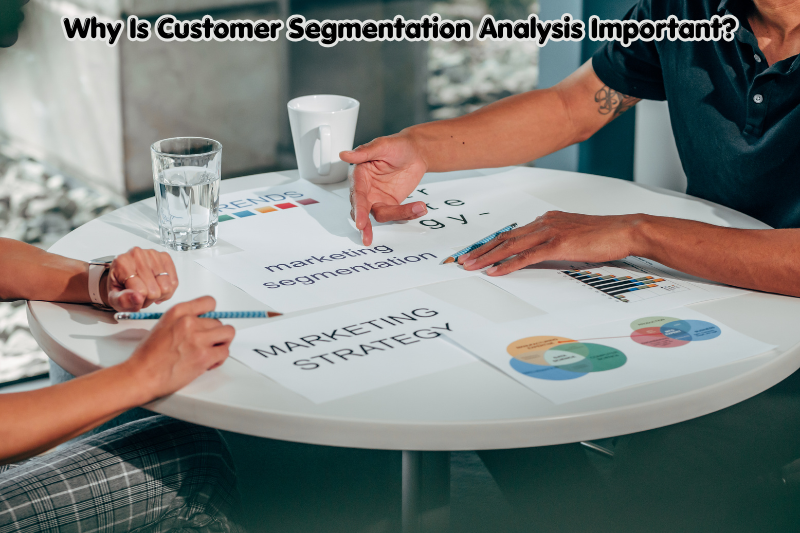
Businesses collect large amounts of customer data, but data alone does not automatically create useful insights.
Segmentation turns customer information into groups that teams can understand and act on.
Better Marketing
A single message rarely works equally well for everyone.
Customer segmentation allows marketers to create campaigns around the interests, behaviors, and needs of specific groups.
More Relevant Customer Experiences
Customers are more likely to respond positively when businesses understand their situation.
For example, a new customer may need educational content, while an experienced customer may be more interested in advanced products or loyalty rewards.
Improved Customer Retention
Segmentation can help identify customers whose behavior suggests they may stop purchasing.
Businesses can then create targeted retention strategies instead of sending the same message to everyone.
Better Use of Marketing Budget
Not every customer segment has the same potential value.
Analyzing segments helps businesses decide where marketing resources may have the greatest impact.
Stronger Product Decisions
Customer groups can reveal different needs and preferences.
Product teams can use these insights to improve existing products or identify opportunities for new ones.
More Effective Sales Strategies
Sales teams can prioritize customers based on factors such as company size, purchase history, engagement, or potential value.
Salesforce also describes segmentation as a way to group customers so businesses can plan activities at the group level rather than repeating the same work for individual customers.
Main Types of Customer Segmentation
There is no single segmentation method that works for every business. The right approach depends on the business objective and the customer data available.
1. Demographic Segmentation
Demographic segmentation groups customers according to measurable personal or household characteristics.
Common variables include:
- Age
- Income
- Occupation
- Education
- Family status
- Gender
- Household size
For example, a financial services company may create different content for young adults, working professionals, and retirees.
Demographics can be useful, but they should not always be treated as the complete picture. Two people of the same age and income can still have very different needs.
2. Geographic Segmentation
Geographic segmentation divides customers according to where they live or operate.
Examples include:
- Country
- State or province
- City
- Neighborhood
- Climate
- Urban or rural location
A restaurant chain, for example, may promote different products depending on the local market.
Geographic data can also help businesses understand differences in demand, shipping requirements, language, and regional preferences.
3. Psychographic Segmentation
Psychographic segmentation focuses on characteristics that are harder to see in basic customer records.
These may include:
- Interests
- Lifestyle
- Values
- Opinions
- Attitudes
- Motivations
- Personal preferences
For example, two customers may have similar ages and incomes but completely different attitudes toward sustainability.
One may prioritize environmentally friendly products, while another may mainly care about price.
Psychographic information can therefore provide deeper insight than demographics alone.
4. Behavioral Segmentation
Behavioral segmentation groups customers according to what they actually do.
Common variables include:
- Purchase frequency
- Product usage
- Website activity
- Email engagement
- Browsing behavior
- Cart activity
- Brand interactions
- Response to promotions
Behavioral data is particularly useful because it focuses on observable customer actions.
For example, an online store could separate customers into frequent buyers, occasional buyers, first-time buyers, and inactive buyers.
5. Needs-Based Segmentation
Needs-based segmentation groups customers according to the problem they are trying to solve or the benefit they expect.
Consider a software company with three customer groups:
- Small businesses needing simple tools
- Growing businesses needing automation
- Large organizations needing advanced controls
All three groups may use the same software category, but their requirements are different.
Needs-based segmentation can therefore help businesses design products, messages, and services around actual customer problems.
6. Value-Based Segmentation
Value-based segmentation considers the economic value customers provide to a business.
A company might compare customers using:
- Total revenue
- Average order value
- Customer lifetime value
- Purchase frequency
- Profitability
- Retention
This can help identify high-value customers and customers who may have strong future potential.
However, businesses should avoid treating low-current-value customers as unimportant. A new customer may currently spend little but have strong long-term potential.
7. Technographic Segmentation
Technographic segmentation groups customers according to their technology usage.
For example, customers might be categorized by:
- Mobile versus desktop usage
- Operating system
- Software preferences
- Devices
- Applications
- Technology adoption
This can be particularly useful for SaaS companies, technology businesses, and digital services.
Customer Segmentation Analysis vs. Market Segmentation
These terms are related but are not exactly the same.
Market segmentation generally looks at a broader market and divides potential audiences into groups.
Customer segmentation analysis focuses more directly on an existing customer base and uses customer data to understand differences between groups.
For example, a company researching a new market might identify young professionals in large cities as a potential market segment.
After those people become customers, the company could analyze their purchase frequency, product preferences, engagement, and customer value to create more detailed customer segments.
Understanding this difference helps businesses choose the right data and analysis approach.
How to Conduct Customer Segmentation Analysis
A successful analysis should follow a clear process.
Step 1: Define Your Business Goal
Start with the question:
Why are we segmenting our customers?
Possible goals include:
- Increasing sales
- Improving retention
- Reducing customer churn
- Personalizing marketing
- Improving customer service
- Finding high-value customers
- Launching a new product
- Improving customer experience
Your goal determines which data and segmentation method you should use.
Step 2: Collect Customer Data
Gather relevant information from available sources.
These may include:
- CRM systems
- Purchase records
- Website analytics
- Customer support systems
- Surveys
- Email platforms
- Mobile applications
- Loyalty programs
- Product usage data
The quality of your analysis depends heavily on the quality of your data.
Step 3: Clean and Prepare the Data
Raw customer data often contains errors.
You may find:
- Duplicate records
- Missing information
- Incorrect values
- Outdated customer details
- Inconsistent formats
- Unusual transactions
Clean the data before creating segments.
Poor-quality data can create misleading groups and incorrect conclusions. Modern segmentation guidance also emphasizes data preparation, including handling outliers and ensuring customer-level measures are reliable.
Step 4: Choose Segmentation Variables
Select the characteristics that matter to your objective.
For example:
If your goal is to improve retention, useful variables might include:
- Last purchase date
- Purchase frequency
- Customer support interactions
- Product usage
- Engagement
If your goal is to improve marketing, you may focus on:
- Interests
- Purchase behavior
- Location
- Product preferences
- Campaign engagement
Avoid collecting or analyzing every possible variable simply because it is available.
Step 5: Create Initial Customer Segments
Use the selected variables to create groups.
For a simple e-commerce example:
| Segment | Typical Behavior |
| New Customers | Recently made their first purchase |
| Loyal Customers | Purchase regularly |
| High-Value Customers | Generate strong revenue |
| At-Risk Customers | Previously active but now declining |
| Inactive Customers | Have not purchased recently |
The exact segment definitions should be based on your business data.
Step 6: Analyze Segment Characteristics
Now look beyond the labels.
Ask:
- How large is each segment?
- How much revenue does it generate?
- How frequently does it purchase?
- Which products does it prefer?
- How engaged is it?
- What problems does it report?
- How long does it remain a customer?
This is where segmentation becomes analysis rather than simple grouping.
Step 7: Compare Segment Performance
Compare important metrics across groups.
For example:
| Metric | New | Loyal | High-Value | At-Risk |
| Average Orders | 1 | 8 | 12 | 5 |
| Average Order Value | $40 | $65 | $120 | $58 |
| Engagement | Medium | High | High | Low |
| Retention | Unknown | High | Very High | Low |
The numbers above are illustrative only. Your business should use its own data.
Step 8: Turn Findings Into Actions
This is one of the most important stages.
A segment should lead to a decision or action.
For example:
New customers:
Send onboarding content and product education.
Loyal customers:
Offer loyalty benefits or early access.
High-value customers:
Provide personalized service and relevant premium offers.
At-risk customers:
Create a targeted retention campaign.
Inactive customers:
Test reactivation messages or offers.
If a segment does not change any business decision, it may not be useful.
Step 9: Test Your Strategy
Do not assume that a segment strategy will automatically work.
Test different:
- Offers
- Messages
- Channels
- Product recommendations
- Timing
- Customer experiences
Compare the results between groups.
Step 10: Review Segments Regularly
Customer behavior changes.
A customer who was highly active last year may now be inactive. A new customer can become a high-value customer over time.
For this reason, segmentation should be reviewed periodically rather than treated as permanent.
Popular Customer Segmentation Analysis Methods
Different analytical methods can be used depending on the size and complexity of your customer data.
Rule-Based Segmentation
This is one of the simplest approaches.
Businesses define clear rules.
For example:
Customers who spent more than $1,000 in the last 12 months = High-Value Customers
This approach is easy to understand and works well for many practical use cases.
RFM Analysis
RFM stands for:
- Recency: How recently did the customer purchase?
- Frequency: How often do they purchase?
- Monetary: How much do they spend?
RFM analysis can help businesses identify patterns among customers based on purchasing behavior.
For example, a customer who purchased recently, purchases frequently, and spends a lot may be considered highly valuable.
Cluster Analysis
Cluster analysis uses statistical techniques to find customers who are similar across multiple variables.
Instead of manually deciding every group, the algorithm can help identify natural patterns within the data.
This can be useful when the customer base is large and contains complex behavioral patterns.
Predictive Segmentation
Predictive approaches use historical data to estimate future behavior.
For example, a company may try to identify customers who are more likely to:
- Churn
- Make another purchase
- Upgrade
- Respond to an offer
Predictive models can be powerful, but they require reliable data and appropriate validation.
Customer Segmentation Metrics to Track
Creating segments is only the beginning. Businesses should measure how each segment performs.
Useful metrics include:
Customer Lifetime Value
Customer Lifetime Value, or CLV, estimates the value a customer may generate during the relationship with the business.
Customer Retention Rate
This measures how effectively the business keeps customers over a specific period.
Churn Rate
Churn measures the percentage of customers who stop using a product or service.
Average Order Value
AOV shows the average amount spent per order.
Purchase Frequency
This measures how often customers purchase during a selected period.
Conversion Rate
Conversion rate shows how often customers complete a desired action.
Customer Engagement
Engagement may include email interactions, website activity, app usage, product usage, or other relevant actions.
Customer Satisfaction
Businesses can use surveys, customer feedback, CSAT, NPS, or other appropriate measures to understand customer sentiment.
Customer Segmentation Analysis Example
Imagine an online electronics store with 20,000 customers.
The company wants to improve repeat purchases.
After analyzing customer data, it identifies four major groups:
Segment A: First-Time Buyers
These customers have purchased once recently.
Strategy: Provide useful product education, onboarding information, and carefully selected recommendations.
Segment B: Repeat Buyers
These customers purchase several times each year.
Strategy: Encourage loyalty and introduce relevant complementary products.
Segment C: High-Value Buyers
These customers make large and frequent purchases.
Strategy: Offer personalized service, early access, premium support, or relevant loyalty benefits.
Segment D: Inactive Customers
These customers previously purchased but have not returned for a long period.
Strategy: Test re-engagement campaigns and identify why their activity declined.
The business can then measure revenue, repeat purchases, engagement, and retention for each group.
This approach is more useful than sending exactly the same campaign to all 20,000 customers.
Common Customer Segmentation Mistakes
Using Too Many Variables
More data does not always mean better analysis.
Too many variables can create confusing or difficult-to-use segments.
Start with variables connected to your business objective.
Creating Segments That Are Too Small
A segment may look interesting but contain too few customers to justify a separate strategy.
Make sure each segment is large enough and meaningful enough for the intended use.
Using Outdated Data
Customer preferences and behaviors change.
Old data can produce inaccurate segments.
Confusing Correlation With Cause
If two characteristics appear together, that does not necessarily mean one causes the other.
Analysis should be interpreted carefully.
Ignoring Customer Feedback
Numbers can reveal what customers do, but feedback can help explain why they do it.
Combining quantitative data with qualitative feedback can provide a more complete picture.
Creating Segments Without an Action Plan
A segment is not automatically valuable just because it is statistically different.
Ask:
What will we do differently because this segment exists?
If there is no clear answer, reconsider the segmentation.
How Technology Helps With Customer Segmentation
Technology can make segmentation faster and easier, particularly when a business has a large customer base.
Businesses may use:
- CRM platforms
- Customer data platforms
- Marketing automation systems
- Analytics tools
- Business intelligence software
- Data warehouses
- Machine learning models
These systems can help combine customer information, apply segmentation rules, monitor behavior, and trigger personalized experiences.
For example, a marketing platform might automatically place a customer into an “at-risk” segment when their purchase activity drops below a defined threshold.
Salesforce similarly supports rule-based customer sets that allow organizations to group customers for specific activities and promotions.
Technology is useful, but businesses should not assume that a more advanced tool automatically produces better segmentation. A simple model based on clean data and a clear objective can be more useful than a complicated model nobody knows how to act on.
Best Practices for Effective Customer Segmentation Analysis
Keep the Business Objective Clear
Always connect segmentation to a real business goal.
Start With Simple Segments
Simple segments are easier to understand, test, and activate.
Use Multiple Data Sources Carefully
Combining purchase, behavioral, demographic, and feedback data can reveal deeper patterns when the data is reliable.
Make Segments Actionable
Each important segment should have a clear strategy.
Validate Your Findings
Check whether segments are genuinely different and useful before making major decisions.
Protect Customer Data
Use customer information responsibly and follow applicable privacy and data protection requirements.
Monitor Performance
Track whether segment-based strategies actually improve business outcomes.
Update Segments
Customer behavior changes, so segmentation should evolve with the business.
What Makes a Good Customer Segment?
A useful customer segment should generally be:
Meaningful: It represents a real difference in customers.
Measurable: You can identify and measure the customers within it.
Large enough: There are enough customers to justify attention.
Reachable: The business can communicate with or serve the group.
Actionable: The business can make a meaningful change based on the segment.
Relevant: The segment supports an important business objective.
A segment that meets these qualities is much more useful than a group created only because the data makes it possible.
Customer Segmentation Analysis for Small Businesses
You do not need a large enterprise or advanced AI system to start.
A small business can begin with a spreadsheet containing information such as:
- Customer name or ID
- Purchase date
- Purchase frequency
- Total spending
- Product category
- Location
- Engagement
- Customer status
From this data, a small business could create simple groups such as:
- New customers
- Repeat customers
- High-value customers
- Inactive customers
The business can then compare the groups and create different strategies.
Starting simple is often better than waiting until you have a sophisticated analytics system.
Customer Segmentation Analysis for SaaS Businesses
SaaS companies can use segmentation to understand how customers use their products.
Useful variables may include:
- Subscription plan
- Company size
- Number of users
- Login frequency
- Feature usage
- Support requests
- Contract value
- Renewal history
- Product engagement
For example, a SaaS company might identify:
Highly engaged customers: Frequently use important features.
Low-engagement customers: Have accounts but rarely use the product.
Expansion-ready customers: Use the product heavily and may need additional capacity.
At-risk customers: Show declining usage or engagement.
Each segment can receive a different customer success or sales strategy.
Customer Segmentation Analysis for E-Commerce
E-commerce businesses have access to many useful customer signals.
They can analyze:
- Purchase history
- Product categories
- Average order value
- Discount usage
- Cart behavior
- Browsing activity
- Purchase frequency
- Returns
- Email engagement
This allows stores to create more relevant campaigns.
For example, customers who repeatedly purchase running products could receive content and offers related to running rather than unrelated products.
Frequently Asked Questions
What is customer segmentation analysis?
Customer segmentation analysis is the process of examining customer data and grouping customers with similar characteristics, behaviors, needs, or value so a business can make more informed and targeted decisions.
What are the four main types of customer segmentation?
The commonly used categories include demographic, geographic, psychographic, and behavioral segmentation. Businesses can also use needs-based, value-based, and technographic segmentation depending on their goals.
What is the purpose of customer segmentation analysis?
Its purpose is to understand meaningful differences between customer groups and use those insights to improve marketing, sales, customer experience, retention, products, and resource allocation.
What data is needed for customer segmentation?
Useful data can include demographic information, location, purchase history, website behavior, product usage, engagement, customer feedback, and customer value. The right data depends on the business objective.
What is RFM customer segmentation?
RFM segmentation evaluates customers using Recency, Frequency, and Monetary value. It is commonly used to understand purchasing behavior and identify valuable or inactive customers.
How often should customer segments be updated?
There is no universal schedule. Businesses should review segments whenever customer behavior, products, markets, or business objectives change significantly. High-frequency businesses may need more frequent updates.
Is customer segmentation only useful for marketing?
No. Segmentation can also support sales, customer service, product development, customer success, pricing, and business strategy. Customer segmentation insights can be shared across teams to support different decisions.
Can small businesses use customer segmentation?
Yes. Small businesses can start with simple segmentation using spreadsheets or basic CRM data. Advanced analytics is not required to create useful customer groups.
What is the difference between customer segmentation and customer segmentation analysis?
Customer segmentation is the process of dividing customers into groups. Customer segmentation analysis goes further by examining those groups, comparing their characteristics and performance, and turning the findings into business actions.
Final Thoughts
Customer Segmentation Analysis gives businesses a clearer view of the people behind their customer data.
Instead of assuming that every customer has the same needs, businesses can identify meaningful differences between groups and respond accordingly. Demographic, geographic, psychographic, behavioral, needs-based, value-based, and technographic approaches can all be useful when applied to the right business problem.
The most important lesson is that segmentation should lead to action. Creating dozens of customer groups is not the goal. The goal is to find meaningful patterns that help the business make better decisions.
Start with a clear objective, use reliable data, create simple and measurable segments, compare their performance, and turn the findings into practical strategies. Then monitor the results and update the segments as customer behavior changes.
When done properly, customer segmentation analysis can become an ongoing decision-making process that helps businesses understand customers more deeply and deliver more relevant experiences.
