


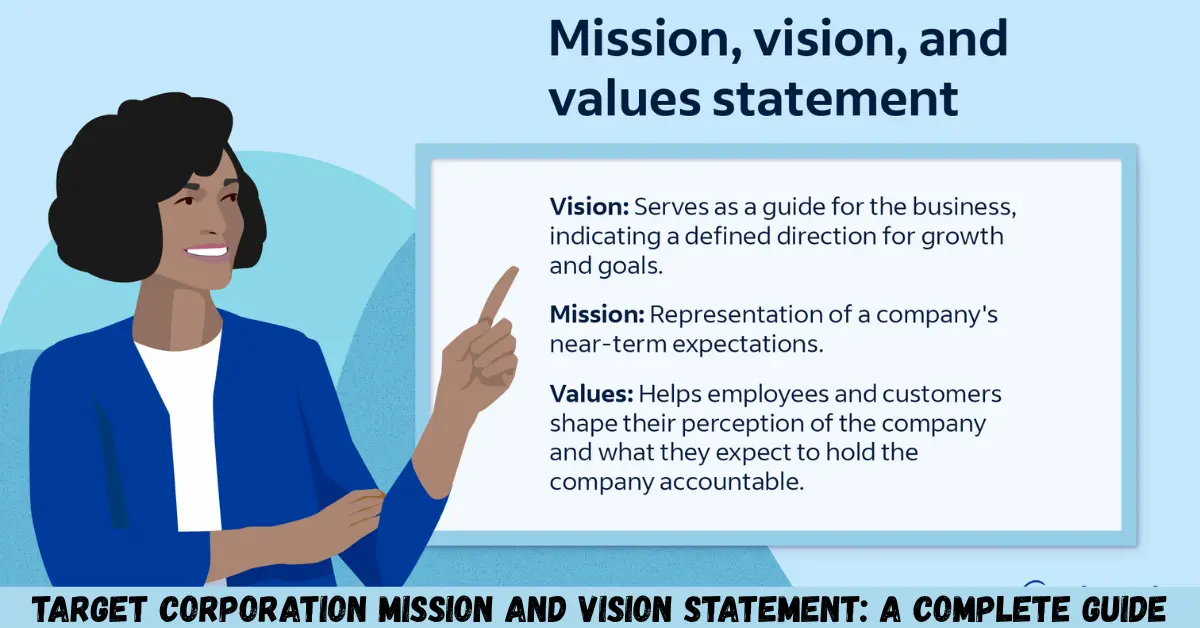
Introduction
Target Corporation mission and vision statement is closely connected to the company’s purpose of helping families find joy in everyday life. Rather than presenting its identity only through traditional mission-and-vision language, Target currently emphasizes its corporate purpose and a clear ambition for the future. Target states that its purpose is to “help all families discover the joy of everyday life,” while its current corporate strategy describes its ambition as becoming “the most delightful experience in retail.”
This distinction matters because many websites still describe older or unofficial versions of Target’s mission and vision. For an accurate understanding, it is better to use Target’s current corporate information and recent regulatory filings.
This article explains the Target Corporation mission and vision statement, its corporate purpose, values, strategic direction, customer focus, and the practical lessons businesses can learn from Target’s approach.
What Is the Target Corporation Mission and Vision Statement?

The current Target corporate purpose is “to help all families discover the joy of everyday life.” Target says this purpose is rooted in the vision of its founders and guides its strategic commitments and leadership decisions.
Target’s current corporate strategy describes its future ambition as being the most delightful experience in retail. The company connects this ambition with style, design, value, guest experience, technology, team development, and community relationships.
In simple terms:
- Purpose: Help all families discover the joy of everyday life.
- Future ambition: Become the most delightful experience in retail.
- Customer focus: Deliver value, style, convenience, inspiration, and enjoyable shopping experiences.
- Strategic approach: Combine merchandising, guest experience, technology, teams, and communities.
This makes the Target Corporation mission and vision statement more than a marketing phrase. It provides a framework for how the company approaches customers, products, stores, digital channels, employees, and communities.
Target Corporation Mission Statement Explained
Target’s corporate purpose is the clearest current expression of its mission:
To help all families discover the joy of everyday life.
The statement is short, but each part has a practical meaning.
“Help”
The word “help” positions Target as a company that supports customers rather than simply selling products. Its role is to make everyday shopping easier, more convenient, and more enjoyable.
“All families”
Target uses a broad customer focus. The company describes its customers as “guests,” reflecting its emphasis on the overall shopping experience rather than only individual transactions.
“Discover”
“Discover” suggests exploration. Target wants shopping to include finding useful products as well as unexpected items, new styles, seasonal products, and inspiration.
“Joy of everyday life”
The purpose goes beyond basic retail functionality. Target connects everyday products and shopping experiences with enjoyment, inspiration, convenience, and value.
This is consistent with Target’s description of itself as a retailer offering affordable everyday essentials, fun, ease, and inspiration.
Target Vision Statement and Future Ambition
One important point about the Target Corporation mission and vision statement is that Target’s current official website does not present a conventional standalone “Vision Statement” in the same way some companies do.
Instead, Target describes its ambition as:
To be the most delightful experience in retail.
This ambition provides a useful way to understand Target’s future direction.
Target explains that it wants shopping to create excitement and discovery while maintaining quality and value. Its strategy emphasizes intentional merchandising, guest experience, technology, and investment in teams and communities.
Therefore, readers researching Target’s vision should distinguish between:
| Element | Target’s current direction |
|---|---|
| Corporate purpose | Help all families discover the joy of everyday life |
| Future ambition | Be the most delightful experience in retail |
| Customer approach | Guest-centered shopping experience |
| Differentiation | Style, design, value and curated assortment |
| Strategic priorities | Merchandising, guest experience, technology, teams and communities |
This approach is more accurate than relying on an older third-party vision statement presented as if it were Target’s current official wording.
Why Is Target’s Mission Important?
Target’s purpose gives the company a common direction across different parts of its business.
Target explains that its purpose shapes business decisions and connects its stores, digital experiences, fulfillment services, and loyalty ecosystem.
1. It creates a clear customer focus
The purpose begins with families and their everyday lives. This gives employees a straightforward question to consider: Does this decision make the guest experience better?
2. It supports brand differentiation
Target competes in a large retail market. Its strategy emphasizes style, design, value, and a curated assortment instead of competing only on price.
3. It connects physical and digital shopping
Target operates through stores and digital channels. Its corporate strategy is designed to provide a seamless experience across these channels.
4. It influences community relationships
Target says its success is connected to the prosperity of the communities it serves. Its corporate purpose therefore extends beyond the shopping transaction.
Target’s Four Current Strategic Priorities
Target’s current corporate strategy identifies four major priorities. These priorities help turn its purpose and ambition into practical business actions.
1. Lead With Merchandising Authority
Target wants to offer differentiated, culturally relevant products that compete through style, design, and value.
The goal is not simply to fill shelves. The company aims to curate products that give customers a reason to choose Target.
2. Elevate the Guest Experience
Target is investing in both digital discovery and physical stores while strengthening loyalty and engagement.
For customers, this can mean easier product discovery, convenient shopping options, and a more connected experience between online and physical locations.
3. Accelerate Technology
Technology is another important part of Target’s strategy. The company says technology should help teams work faster and create more personalized and enjoyable experiences for guests.
4. Strengthen Team and Communities
Target also focuses on employee development and community relationships. Its strategy recognizes that employees and communities are important to long-term business success.
Target Corporation Values and Culture
The Target Corporation mission and vision statement becomes easier to understand when viewed alongside its culture and values.
Target’s published Code of Ethics identifies its culture as “Care, Grow and Win Together.” It also identifies three values: inclusivity, connection, and drive.
Inclusivity
Target describes inclusivity as valuing different voices and approaches while working toward equitable experiences.
Connection
Connection focuses on building trusted relationships and collaborating across the organization.
Drive
Drive emphasizes doing what is right for Target, its teams, and guests while focusing on meaningful results and continuous learning.
Together, these ideas provide behavioral guidance for putting the company’s purpose into practice.
How Target’s Mission Appears in Its Business Strategy

A mission statement becomes meaningful when a company can connect it to actual business decisions.
Target’s current strategy provides several examples.
Product Selection
Target emphasizes a curated, multi-category assortment that combines design, style, and value.
Shopping Experience
Target aims to make shopping convenient and enjoyable across physical stores and digital platforms.
Employee Development
Target says it invests in training and career growth for team members as part of its strategic priorities.
Community Support
Target reports that it has given 5% of its profits to communities since 1946 through products, cash, and the Target Foundation.
These examples show how a corporate purpose can influence multiple areas of a large organization.
Benefits of a Strong Mission and Vision
The Target Corporation mission and vision statement offers several useful lessons for companies of different sizes.
Clear Direction
A concise purpose gives employees a common understanding of what the company is trying to accomplish.
Stronger Brand Identity
A recognizable purpose can help a business differentiate itself from competitors.
Customer-Centered Decisions
A customer-focused purpose encourages businesses to evaluate products, services, technology, and communication from the customer’s perspective.
Employee Alignment
Employees can better understand how their individual responsibilities contribute to broader company objectives.
Long-Term Strategy
A strong purpose can remain relevant even when products, technologies, and market conditions change.
Limitations of Mission and Vision Statements
Mission statements are useful, but they are not a substitute for effective execution.
A company can have an excellent purpose but still struggle if its products, customer service, pricing, technology, or operations fail to deliver on that promise.
Some common limitations include:
- A statement can become too broad.
- Employees may interpret it differently.
- Customers may not believe it without consistent evidence.
- Business decisions can conflict with stated values.
- A purpose cannot replace a strong competitive strategy.
- Changing market conditions may require strategic adjustments.
Target’s approach illustrates why purpose needs to be connected with measurable strategic priorities rather than treated as a standalone slogan.
What Businesses Can Learn From Target
Businesses studying the Target Corporation mission and vision statement can apply several practical lessons.
Keep the Core Purpose Simple
A strong purpose should be easy for employees and customers to understand.
Connect Purpose With Customer Experience
Don’t stop at publishing a statement. Product design, customer service, websites, stores, and marketing should reinforce it.
Turn Vision Into Priorities
A future ambition becomes more useful when it is translated into specific strategic initiatives.
Make Values Actionable
Words such as inclusivity, connection, and drive become meaningful when they influence everyday behavior and decisions.
Review the Statement Against Reality
Companies should regularly ask whether their actual customer experience reflects their stated purpose.
Common Mistakes When Researching Target’s Mission and Vision
Mistake 1: Treating an Old Statement as Current
Many third-party websites publish historical mission or vision statements. Always check the company’s current corporate pages and recent filings.
Mistake 2: Confusing the Slogan With the Mission
“Expect More. Pay Less.” is strongly associated with Target’s brand, but it should not automatically be treated as the company’s current corporate purpose.
Mistake 3: Ignoring the Word “Purpose”
Target currently emphasizes purpose rather than relying exclusively on a traditional mission/vision framework. Its official corporate materials explicitly call “help all families discover the joy of everyday life” its purpose.
Mistake 4: Using Unverified Vision Statements
Some websites publish a separate Target vision statement without clearly identifying its official origin. For accurate content, distinguish official statements from third-party interpretations.
Mistake 5: Looking at the Statement Without the Strategy
The purpose becomes much clearer when considered alongside Target’s four current strategic priorities.
How to Analyze Any Company’s Mission and Vision Statement
If you’re researching another company, use this simple process:
- Find the official corporate website.
- Locate its About, Purpose, or Corporate Strategy page.
- Check recent annual reports or regulatory filings.
- Separate mission, vision, purpose, slogan, and values.
- Look for current strategic priorities.
- Compare the statement with actual products and customer experience.
- Avoid presenting outdated third-party wording as current information.
This approach produces a more reliable analysis and is particularly useful for students, business researchers, writers, and marketing professionals.
Frequently Asked Questions
What is Target Corporation’s mission statement?
Target’s current corporate purpose is “to help all families discover the joy of everyday life.” Target describes this purpose as central to its identity and says it guides business decisions and strategic commitments. The company connects the purpose with affordable essentials, style, convenience, inspiration, and enjoyable shopping experiences.
What is Target Corporation’s vision statement?
Target does not currently present a conventional standalone vision statement on its main corporate purpose page. Instead, its current corporate strategy identifies an ambition: to be the most delightful experience in retail. This ambition is supported by priorities involving merchandising, guest experience, technology, teams, and communities.
What is Target Corporation’s main purpose?
Target’s main corporate purpose is to help all families discover the joy of everyday life. The company says this purpose is rooted in the vision of its founders and guides its strategic commitments. It is reflected in the way Target approaches products, customer experiences, employees, digital channels, stores, and communities.
What are Target’s core values?
Target’s Code of Ethics identifies three values: inclusivity, connection, and drive. Its culture is described as “Care, Grow and Win Together.” These concepts are intended to guide how team members work with one another, guests, partners, and communities.
Why is Target’s mission statement important?
Target’s purpose gives the company a consistent customer-centered direction. It connects the brand with everyday experiences rather than focusing only on individual products. The purpose also supports Target’s broader strategy around design, style, value, guest experience, technology, employee development, and community relationships.
Conclusion
The Target Corporation mission and vision statement is best understood through Target’s current language of purpose and ambition. Target’s corporate purpose is to help all families discover the joy of everyday life, while its current ambition is to become the most delightful experience in retail.
What makes this approach useful is the connection between words and strategy. Target supports its purpose through merchandising, customer experience, technology, team development, and community investment. Its values of inclusivity, connection, and drive provide additional guidance for how employees are expected to bring that purpose to life.
For anyone researching Target for a business, marketing, education, or movie/business-content website, the most practical takeaway is simple: use Target’s current official corporate purpose and strategy rather than relying on outdated third-party mission and vision statements. For further verification, compare corporate-purpose pages with Target’s latest annual report before publishing.
