



Target Corporation Company Profile: History, Business, Revenue and Key Facts
Target corporation company profile information provides a useful overview of one of the best-known general merchandise retailers in the United States. Target Corporation operates stores across all 50 U.S. states and the District of Columbia, while also serving customers through its digital channels. Its business combines general merchandise, groceries, exclusive brands, digital shopping, fulfillment, advertising, and other services.
Target Corporation was incorporated in Minnesota in 1902. The company has evolved considerably since its early retail history and today operates as a single business segment focused on connecting physical stores with digital shopping. Its fiscal 2025 net sales were $104.78 billion, while it operated 1,995 stores at the end of fiscal 2025.
The target corporation company profile provides useful information about Target Corporation. This target corporation company profile explains the company’s history and business. Readers can use this target corporation company profile to learn about its stores and products. The target corporation company profile also covers its revenue and retail strategy. For more details, visit the official Target website and explore this target corporation company profile for a simple overview. The target corporation company profile is useful for business research. This target corporation company profile gives readers a clear understanding of Target Corporation. Overall, the target corporation company profile is a helpful resource for learning about the company.
The target corporation company profile provides useful information about Target Corporation. This target corporation company profile explains the company’s history and business. Readers can use this target corporation company profile to learn about its stores and products. The target corporation company profile also covers its revenue and retail strategy. For more details, visit the official Target website and explore this target corporation company profile for a simple overview. The target corporation company profile is useful for business research. This target corporation company profile gives readers a clear understanding of Target Corporation. Overall, the target corporation company profile is a helpful resource for learning about the company.
For readers in India researching American companies, retail brands, corporate histories, or business models, this Target Corporation company profile explains the company’s background, operations, products, financial performance, technology-enabled retail model, and current strategic direction.
What Is Target Corporation?

Target Corporation is a U.S.-based general merchandise retailer that sells a broad range of products through physical stores and digital channels. Its assortment includes apparel, beauty products, food and beverages, household essentials, home furnishings, décor, and hardlines.
The company positions itself around style, design, value, and convenience rather than competing only on low prices. Target’s corporate purpose is to help families discover the joy of everyday life, and its strategy is designed around creating a distinctive shopping experience.
Target operates primarily in the United States. Its corporate headquarters are in Minneapolis, Minnesota, and the company also maintains administrative and sourcing operations internationally, including administrative functions in Bangalore, India.
Target Corporation Company Profile at a Glance
| Profile Detail | Information |
|---|---|
| Company | Target Corporation |
| Founded/Incorporated | 1902 |
| Headquarters | Minneapolis, Minnesota, U.S. |
| Industry | Retail |
| Business Type | General merchandise retailer |
| Fiscal 2025 Net Sales | $104.78 billion |
| Fiscal 2025 Stores | 1,995 |
| Fiscal 2025 Team Members | Approximately 415,000 |
| Core Market | United States |
| Major Channels | Stores and digital |
| Key Categories | Apparel, beauty, food, hardlines, home, household essentials |
| Owned Businesses | Shipt and Roundel |
Target reported 415,000 team members in its fiscal 2025 corporate overview. The company also states that it owns Shipt and Roundel, adding services beyond its traditional retail operations.
History of Target Corporation
Target’s corporate history goes back to 1902, when the company was incorporated in Minnesota. Over time, the organization developed its retail operations and eventually built the Target brand into a major U.S. shopping destination.
A particularly important part of Target’s identity is its emphasis on combining affordability with design and style. Rather than presenting itself simply as a discount retailer, Target has developed a brand associated with curated merchandise, exclusive products, recognizable visual branding, and convenient shopping.
The company’s Bullseye mascot is another important part of its identity. Target says Bullseye has served as its mascot since 1999 and first appeared in the company’s iconic “Sign of the Times” advertising campaign.
Target’s Brand Development
Target’s brand strategy has developed around several recognizable ideas:
- Accessible pricing
- Modern product design
- Exclusive merchandise
- Convenient physical stores
- Digital shopping
- Fast fulfillment
- Strong visual branding
- A broad assortment for everyday needs
Target also reports having more than 45 owned brands unique to Target, which helps differentiate its merchandise from competitors.
Target’s Business Model
Target’s business model combines physical retail stores with digital commerce and multiple supporting revenue streams.
The company operates as a single segment, meaning its operations are managed as one integrated business rather than several separately reported operating segments. Customers can shop through stores and digital channels, with stores also playing an important role in fulfilling digital orders.
Target’s merchandise categories include:
Apparel and Accessories
Target sells clothing, shoes, jewelry, and accessories for women, men, children, toddlers, and babies. In 2025, apparel and accessories generated approximately $15.74 billion in merchandise sales.
Beauty
The beauty category includes products such as skin and bath care, cosmetics, hair care, oral care, deodorant, and shaving products. Target reported approximately $13.21 billion in beauty merchandise sales in 2025.
Food and Beverage
Food and beverage is one of Target’s largest merchandise categories. It generated approximately $24.14 billion in merchandise sales in 2025.
Home Furnishings and Décor
Target also offers furniture, home décor, and related products. This category generated approximately $15.61 billion in merchandise sales in 2025.
Household Essentials
Household essentials include products used regularly in homes. The category generated approximately $18.02 billion in merchandise sales in 2025.
Hardlines
Hardlines cover a broad selection of general merchandise products and generated approximately $15.80 billion in 2025 merchandise sales.
Target Corporation Revenue and Financial Performance
Financial performance is one of the most important elements of any Target Corporation company profile.
Target reported $104.78 billion in net sales for fiscal 2025, compared with $106.57 billion in 2024 and $107.41 billion in 2023. Operating income was $5.12 billion in 2025, while net earnings were $3.71 billion.
The company’s five-year figures show that annual sales remained above $100 billion throughout 2021–2025, although profitability and sales changed from year to year. Target reported $109.12 billion in net sales in 2022, followed by $107.41 billion in 2023, $106.57 billion in 2024, and $104.78 billion in 2025.
This performance highlights an important point: Target is a very large retailer, but size alone does not eliminate the challenges of changing consumer demand, operating costs, competition, and retail trends.
Target’s Store Network
Target’s physical store network remains central to its business model.
As of January 31, 2026, Target had 1,995 stores across the United States. Its properties included approximately 250.5 million retail square feet, along with 70 supply chain facilities.
Target’s stores are not simply shopping locations. They also support digital fulfillment. According to the company’s 2025 annual report, stores fulfilled 97.6% of merchandise sales through its fulfillment network in 2025, demonstrating how important physical locations are to Target’s omnichannel model.
This approach can provide a practical advantage: a customer may order a product online while the company’s store network helps bring that order closer to the customer.
Target’s Digital and Omnichannel Strategy
Target has increasingly integrated physical retail with digital commerce.
Its digital channels offer a wide merchandise assortment that includes products available in stores as well as additional products sold by Target and third-party sellers through the Target Plus marketplace.
In 2025, digitally originated merchandise sales reached approximately $21.1 billion, compared with $20.5 billion in 2024 and $19.4 billion in 2023.
This illustrates how digital shopping has become an important part of the company’s overall business without replacing physical stores.
Target’s Presence and Operations Related to India
Target is primarily a U.S. retailer, and nearly all of its sales are generated in the United States. However, India is relevant to the company’s global operations.
Target states that it performs additional administrative functions in Bangalore, India, while its global sourcing operations extend across offices in multiple countries.
For an Indian audience, this distinction is important. Target should not be described as a major retail chain operating physical stores across India. Its principal retail footprint remains in the United States.
Target’s Other Businesses
Target Corporation’s operations extend beyond traditional merchandise sales.
The company identifies Shipt and Roundel as businesses it owns.
Target also earns revenue from advertising and credit card profit-sharing in addition to merchandise sales. In 2025, the company reported $915 million in advertising revenue and $522 million in credit card profit-sharing revenue.
These additional revenue streams demonstrate how large retailers can build businesses around their customer relationships, digital platforms, and consumer traffic rather than relying solely on product sales.
Why Is Target’s Business Model Important?
Target’s model is important because it demonstrates how a large retailer can connect physical stores, digital commerce, fulfillment, exclusive brands, advertising, and customer experience.
Three elements are particularly significant:
- Physical stores: Target’s large store network provides convenient shopping locations and fulfillment capacity.
- Digital commerce: Customers can browse and purchase products through Target’s digital channels.
- Integrated fulfillment: Stores can help fulfill digital demand, connecting online orders with the company’s physical infrastructure.
This integrated approach allows Target to serve customers through multiple shopping methods rather than relying on a single channel.
Strengths of Target Corporation
Several characteristics contribute to Target’s competitive position.
Strong Brand Recognition
Target has built a recognizable brand through its Bullseye identity, distinctive stores, marketing, and product assortment.
Large Store Network
With 1,995 stores at the end of fiscal 2025, Target has extensive physical coverage throughout the United States.
Exclusive Brands
More than 45 owned brands unique to Target help create product differentiation and give customers reasons to shop specifically at Target.
Omnichannel Capabilities
The combination of stores and digital channels allows Target to support both traditional shopping and online purchasing.
Diverse Merchandise
Target sells products across multiple major categories, including food, beauty, apparel, home, household essentials, and hardlines. This broad assortment allows customers to purchase different types of products during the same shopping trip.
Limitations and Challenges
A balanced Target Corporation company profile should also recognize the company’s challenges.
Target’s fiscal 2025 net sales declined from the previous year, while operating income and net earnings also decreased. The company’s reported 2025 comparable sales declined by 2.6%.
Large retailers also face ongoing challenges involving:
- Consumer spending patterns
- Pricing pressure
- Inventory management
- Supply chain costs
- Digital fulfillment expenses
- Competition from other retailers and e-commerce platforms
- Changing customer expectations
Target’s own 2025 annual report describes a refreshed strategy focused on returning the company to growth and improving the shopping experience.
Target Corporation Strategy for Future Growth
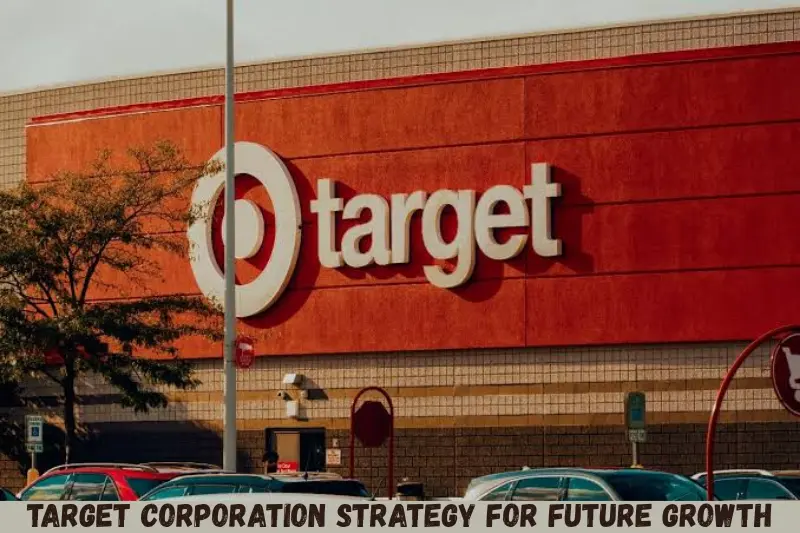
Target’s current strategy emphasizes improving the overall customer experience while strengthening its competitive position.
The company’s 2025 annual report describes priorities around pricing, product availability, fulfillment, new merchandise, and making the shopping experience easier and more inspiring.
For Target, future growth depends not only on opening stores or increasing online sales. It also depends on ensuring that customers find relevant products, competitive prices, reliable inventory, convenient fulfillment, and a consistent experience across shopping channels.
Key Facts to Remember About Target Corporation
If you need a quick summary of the Target Corporation company profile, these are the most important points:
- Target Corporation was incorporated in Minnesota in 1902.
- Its headquarters are in Minneapolis, Minnesota.
- It is a general merchandise retailer.
- Its primary retail market is the United States.
- Target had 1,995 stores at the end of fiscal 2025.
- Fiscal 2025 net sales were $104.78 billion.
- Fiscal 2025 net earnings were $3.71 billion.
- Target operates through physical stores and digital channels.
- The company owns Shipt and Roundel.
- Its major merchandise categories include apparel, beauty, food and beverage, hardlines, home furnishings and décor, and household essentials.
- Target maintains administrative operations in Bangalore, India.
- The Bullseye mascot has represented Target since 1999.
Common Mistakes When Researching Target Corporation
People researching Target sometimes make several basic mistakes.
Mistake 1: Treating Target as an Indian retail chain.
Target’s retail stores are concentrated in the United States. Its India connection includes administrative and sourcing operations rather than a nationwide network of Target retail stores.
Mistake 2: Confusing net sales with profit.
Target’s $104.78 billion figure for 2025 represents net sales, not net profit. Net earnings were $3.71 billion.
Mistake 3: Looking only at online sales.
Target’s physical stores remain central to its fulfillment and overall retail strategy.
Mistake 4: Using outdated company statistics.
Store counts, revenue, leadership, and strategy can change. For corporate research, the latest annual report and investor information should be checked before publishing updated statistics.
Internal link
For readers researching the Target Corporation company profile, this detailed guide explains the company’s history, business model, stores, products, revenue, and corporate strategy. You can also learn more about Target Corporation through its official corporate website for additional company and investor information.
Learn more about the Target Corporation company profile to understand its history, business operations, revenue, stores, and retail strategy. For verified corporate information, visit the official Target Corporation website.
Frequently Asked Questions
1. What is Target Corporation?
Target Corporation is a major U.S. general merchandise retailer. It sells products across categories such as apparel, beauty, food and beverage, home furnishings, household essentials, and hardlines. The company serves customers through physical stores and digital channels and operates primarily in the United States.
2. How many Target stores are there?
Target had 1,995 stores as of January 31, 2026. These stores were located throughout the United States. The company also operated 70 supply chain facilities at that time.
3. What was Target Corporation’s revenue in 2025?
Target Corporation reported $104.78 billion in net sales for fiscal 2025. This was lower than its $106.57 billion net sales in 2024. Target reported $3.71 billion in net earnings for fiscal 2025.
4. Does Target Corporation operate stores in India?
Target’s main retail operations are in the United States, not India. However, the company has administrative functions in Bangalore and global sourcing operations in multiple countries. Therefore, India’s connection to Target is primarily related to corporate and sourcing operations rather than Target retail stores.
5. What does Target Corporation sell?
Target sells a wide range of merchandise, including apparel and accessories, beauty products, food and beverages, hardlines, home furnishings and décor, and household essentials. Its digital channels also provide additional merchandise through Target and third-party sellers on Target Plus.
Conclusion
The Target corporation company profile shows how a long-established U.S. retailer has developed into a large omnichannel business combining physical stores, digital commerce, exclusive brands, fulfillment capabilities, advertising, and other services. Target was incorporated in Minnesota in 1902 and has built a recognizable retail identity around style, design, value, and convenience.
The company’s fiscal 2025 results demonstrate its enormous scale, with $104.78 billion in net sales, $3.71 billion in net earnings, and 1,995 stores. At the same time, its recent financial performance shows that Target continues to face competitive and operational challenges.
For readers researching Target for business, retail, corporate, or movie-related content, the best next step is to use the company’s latest annual report alongside its official corporate information. That approach helps keep revenue, store counts, strategy, and leadership details accurate as the company changes.
